
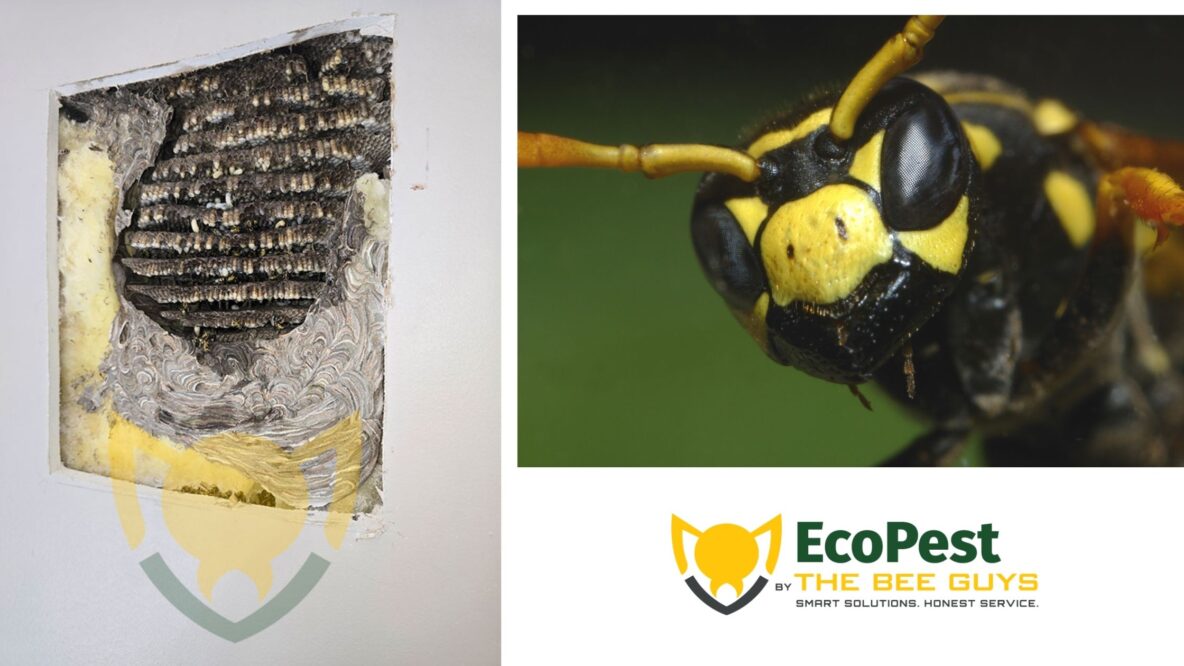
When yellow jackets or hornets build a nest inside a wall, ceiling, soffit, or attic, homeowners usually have two treatment options: exterminating the colony inside the structure or physically removing the nest. The right choice depends on the nest’s location, accessibility, and whether the insects have entered your living space.
The short answer: Extermination is usually less invasive and and and more affordable affordable. Physical nest removal may be the better choice when yellow jackets have chewed through drywall, entered living areas, or built a nest that that technicians technicians can safely access.
Option 1: Physical Yellow Jacket Nest Removal
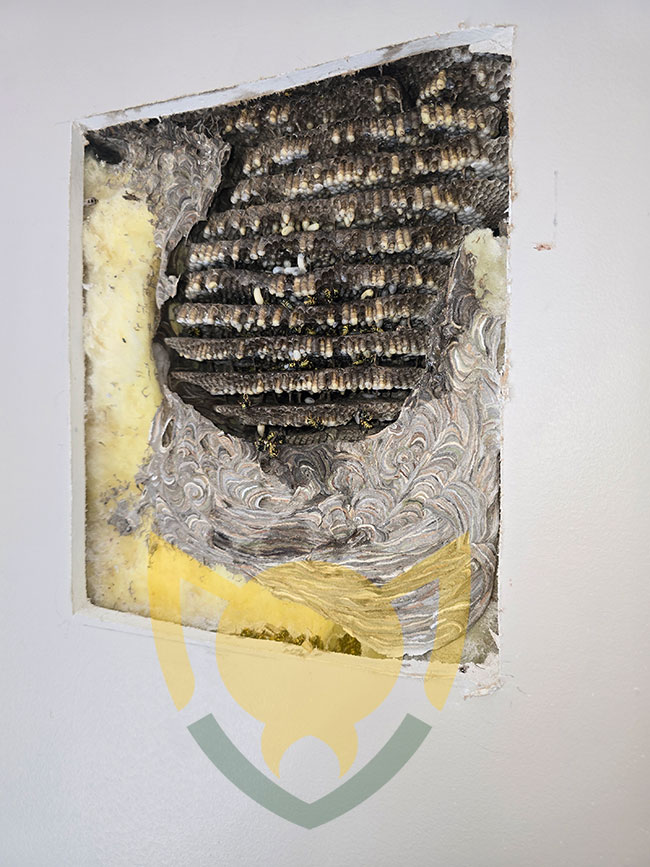
Nest Removal is exactly what it sounds like. We locate the nest, gain access to it, remove the nest itself, and remove as much remaining nest material and insect debris as reasonably possible.
If the nest is located inside an exterior wall, removal is usually an invasive procedure and may require opening drywall, siding, soffit, trim, or another building component. If the nest is located above a ceiling and can be safely reached from an attic, it may be possible to remove it without cutting through the finished ceiling.
When Yellow Jacket Removal or Bee Removal Is Often the Best Option
Yellow jacket removal becomes especially important when yellow jackets begin chewing through drywall or another interior building material and entering the living space.
At that point, the problem is no longer limited to exterior activity at a nest entrance. The insects may be actively invading the living space, and physically accessing and removing the nest is often the best way to bring that type of infestation under control.
Advantages of Nest Removal
– The nest and accessible nest material are physically taken out of the structure.
– Removing the colony can eliminate the active infestation immediately.
– Removal eliminates accumulated nest material and insect debris from the cavity.
– Often the preferred approach when yellow jackets have chewed through drywall and are entering the home’s occupied space.
Considerations with Nest Removal
– Removal is usually more invasive than extermination.
– Walls, ceilings, soffits, siding, or other building materials may need to be opened.
– The property owner may need to repair the opened area after the nest has been accessed.
– Because of the additional labor, access work, cleanup, and possible repairs, removal generally costs more than extermination.
Option 2: Structural Yellow Jacket Extermination
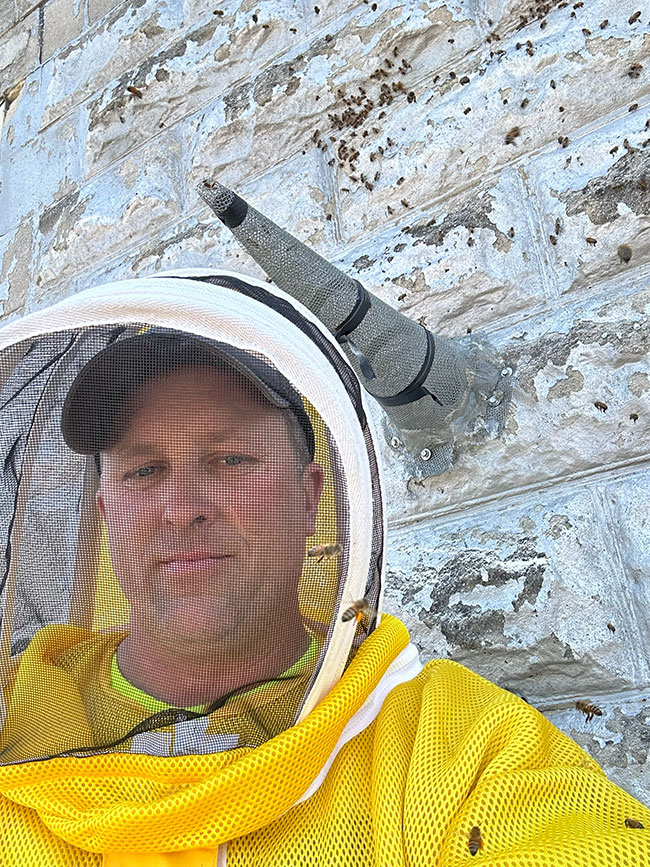
Structural extermination is generally a non-invasive or minimally invasive procedure. Instead of opening the structure and physically removing the nest, we treat the infestation so the colony dies inside the space inside a wall or ceiling.
Depending on the treatment and nest location, some insects may die quickly, while foragers that are away from the nest can continue returning for a period of time. As those foragers return to the treated nest area, the remaining colony is eliminated.
In many situations, our technicians can often treat the colony from outside without cutting into the structure. Depending on access and the circumstances, it can also often be completed without the customer being present.
Advantages of Yellow Jacket Extermination
- Extermination is usually non-invasive or minimally invasive.
- Generally it costs less than physically opening the structure and removing the nest.
- There is usually little or no structural repair associated with the treatment.
- It can be very practical when a nest is deep inside a wall, soffit, or other difficult-to-access cavity.
Can Yellow Jackets Return to an Old Nest?
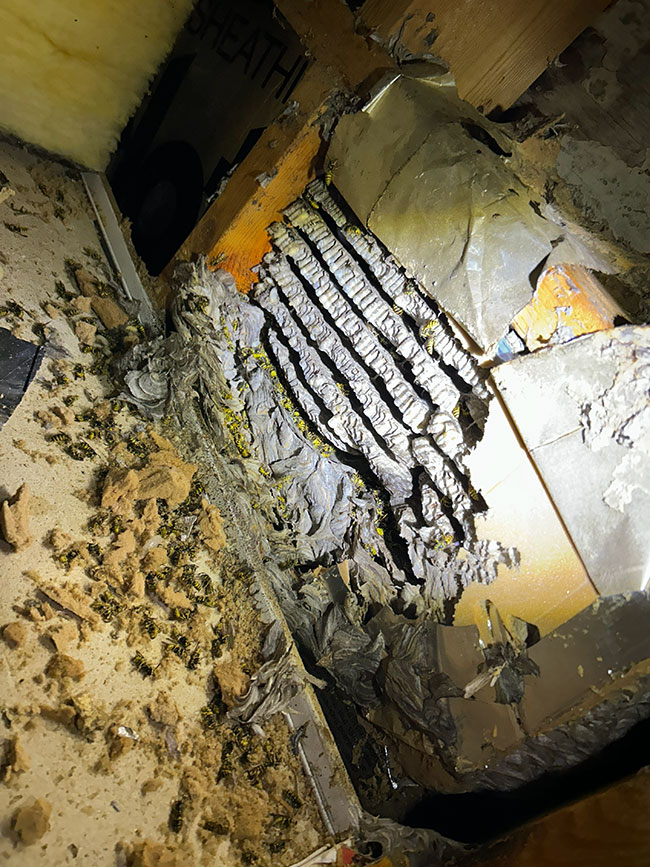
An important consideration is what happens to the nest after the colony has been exterminated. In our field experience, yellow jackets can occupy or build within previously used nesting cavities, and we sometimes see evidence of activity associated with old nest locations. For that reason, we do not tell customers that an old nest or nest location can never be used again.
At the same time, the odor associated with a dead colony and decomposing insects can make the treated area less attractive to other stinging insects. Yellow jackets and hornets rely heavily on chemical and odor cues, so the odor left behind from a dead colony may discourage another colony from using that location.
That does not make reinfestation impossible. Structural openings, gaps, and favorable voids can still provide future nesting opportunities. Where practical, sealing the entry point after the colony is inactive provides an additional layer of protection.
Which Option Is Right for Your Property?
There is no single treatment method that is best for every structural yellow jacket or hornet infestation. If the nest is contained inside an inaccessible void with no interior breakthrough, extermination may provide an effective, less-invasive, and more economical solution. If the insects are chewing through drywall, entering occupied areas, or the nest is readily accessible and removal is practical, physical removal may be the better option.
The species, nest location, accessibility, construction of the building, amount of interior activity, safety concerns, repair requirements, and cost should all be considered before choosing the treatment method.
EcoPest Solutions by The Bee Guys LLC
Get Help With Yellow Jackets Inside Your Home
Yellow jackets inside a wall or ceiling can eventually enter the living space. If you notice unusual wall stains, scratching sounds, increased indoor activity, or insects emerging through drywall, contact EcoPest Solutions by The Bee Guys.
Our family-owned team provides structural extermination, physical nest removal, and emergency pest services. We will inspect the location, explain your options, and recommend an approach based on safety, access, property damage, and cost.
Call 717-693-5522 or request an inspection online.
Homeowners Trust Us
✔ Family-Owned & Operated
✔ National Pest Management Association Member
✔ York County Beekeepers Association Member
✔ Eco-Friendly Treatment Options
✔ Humane Honey Bee Relocation
✔ Emergency Pest Services Available
✔ Results Guaranteed or Your Money Back
- Ethical Pest Management: Specializing in humane alternatives to extermination, particularly for bees, wasps, hornets, and yellow jackets.
- Full-Service Pest Control: Licensed and equipped to manage a wide range of pest issues, from common insects to more unusual or difficult pest situations.
- Residential and Commercial Services: Providing tailored solutions for both homes and businesses, ensuring thorough and effective pest control strategies.
- Eco-Friendly Practices: Committed to environmentally responsible methods that minimize ecological impact while effectively managing pest issues.
- Family-Owned Business: Offering the care, integrity, and personal touch that only a family-owned company can provide.
- Exceptional Customer Service: Dedicated to building lasting relationships through trust, reliability, and superior service quality.
- Rapid Response and Effective Results: Prioritizing quick service to handle pest issues promptly and efficiently, with a focus on achieving long-term solutions.