
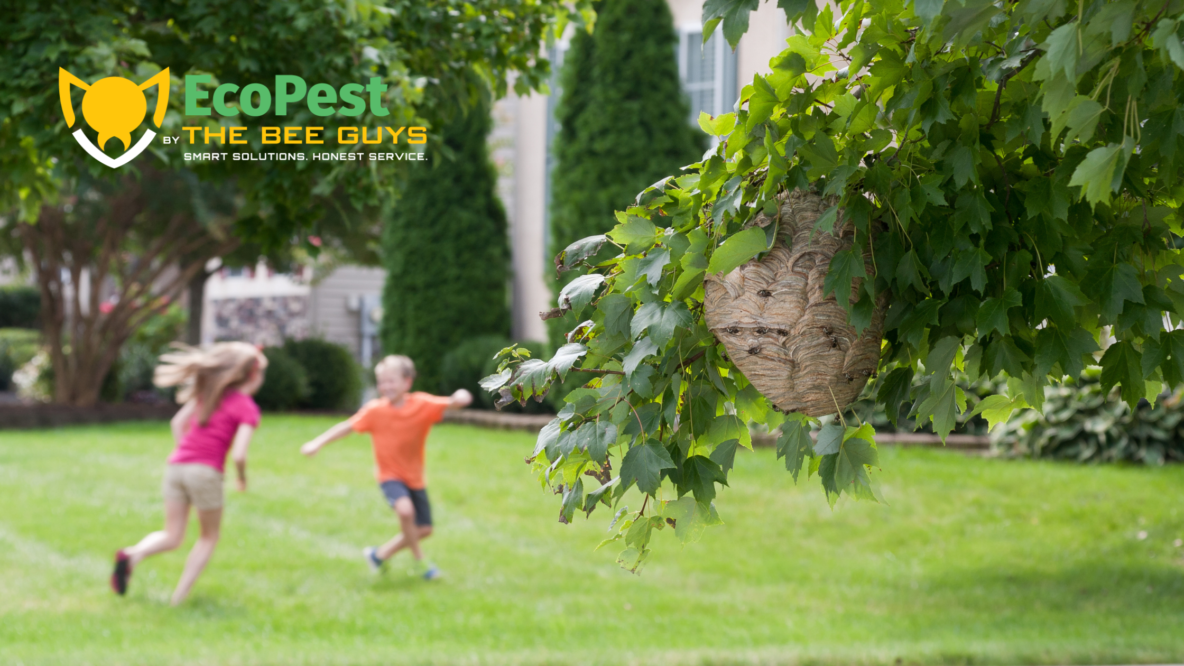
If it feels like yellow jackets suddenly showed up everywhere, you’re not imagining it.
Late summer into early fall is when yellow jacket colonies are typically at their largest. A nest that started with one queen months ago may now contain hundreds of insects, which means a lot more activity around homes, yards, trash cans, decks and outdoor eating areas.
For homeowners in York County, Pennsylvania and Northern Maryland, this is also the time of year when a nest that’s been hidden all summer can finally make itself known.
And sometimes, it’s not hanging from a tree where you can easily see it.
The Yellow Jackets You See May Not Be the Real Problem
Seeing a few yellow jackets around food or trash doesn’t necessarily mean there’s a nest on your property.
But if you’re seeing them repeatedly flying in and out of the same spot on your house, pay attention.
Look around:
- Siding
- Soffits and fascia
- Rooflines
- Porch and deck areas
- Gaps around exterior trim
- Openings where utilities enter the house
- Holes in the ground
That repeated flight pattern can indicate a nest entrance.
Yellow jackets can establish nests in structural voids, including spaces inside walls.
The Warning Sign Most Homeowners Don’t Expect
Here’s one we want more homeowners to know about.
If yellow jackets are nesting inside a wall or ceiling, you may notice something inside the house before you ever see the nest.
A discolored or softened area of drywall can resemble a water stain.
You may also hear faint:
scratching, chewing or ticking sounds.
As activity progresses, yellow jackets can potentially reach the interior surface and enter the living space.
If you have unexplained ceiling or wall damage and you’re seeing heavy yellow jacket activity outside in the same general area, don’t assume it’s just a plumbing problem.
Have it checked.
Don’t Seal the Entrance Yet
This is one of the biggest mistakes homeowners can make.
You find the little opening they’re using and think:
I’ll just seal it. Problem solved.
Not necessarily.
If an active colony is inside the structure, sealing its normal entrance doesn’t eliminate the insects already inside.
The infestation needs to be evaluated and treated first.
Once the colony is inactive, correcting the exterior opening can help reduce future opportunities for pests to enter the structure.
Does the Wall Have to Be Opened?
No. And this is important.
Finding yellow jackets inside a wall doesn’t automatically mean we’re going to start cutting into your house.
There are generally two approaches.
Structural Extermination
The colony is treated inside the structural void without physically removing the nest.
This is often the less invasive and more economical option, particularly when the nest is contained inside an inaccessible area and insects have not broken through into the home.
Physical Nest Removal
Sometimes accessing the nest is the better option.
For example, if yellow jackets have broken through the drywall and are actively entering a bedroom, living room or another occupied area, we may recommend accessing and physically removing the nest.
The right answer depends on where the nest is, what the insects are doing and how the home is constructed.
We don’t believe in opening walls when they don’t need to be opened.
Why Are Yellow Jackets So Interested in Your Cookout Right Now?
There’s another reason homeowners notice them more this time of year.
Late in the season, yellow jackets become particularly interested in sugary foods and drinks and commonly show up around picnics, barbecues, garbage cans and ripe fruit.
A few simple things can help:
Keep drinks covered.
Close trash cans tightly.
Clean up spills.
Pick up fallen fruit.
And check a drink before taking a sip if it’s been sitting outside.
Yellow Jacket or Honey Bee? It Matters.
We don’t treat every flying insect the same way.
Yellow jackets, hornets and wasps can be exterminated when they pose a threat.
Honey bees are handled differently. EcoPest + The Bee Guys safely removes or relocates honey bees whenever appropriate and practical.
If you’re not sure what you’re looking at, don’t guess.
Send us a photo or give us a call.
Correct identification is the first step toward choosing the right solution.
When Should You Call a Professional?
You don’t necessarily need pest control because one yellow jacket flew past your hamburger.
But we’d recommend getting help when you notice:
- Heavy traffic entering one specific area of your home
- A nest near a doorway, deck, play area or other high-traffic location
- Yellow jackets entering the house
- Unexplained sounds inside a wall or ceiling
- Suspicious drywall deterioration near exterior insect activity
- A nest you can’t safely access
- Anyone in the household with a serious sting allergy
Penn State similarly recommends considering professional treatment when a nest’s location creates a significant sting risk.
And If It Happens After Business Hours?
Call us.
Stinging insect problems don’t conveniently happen Monday through Friday from 9 to 5.
EcoPest + The Bee Guys keeps our phone available 24/7 for pest emergencies.
There’s no national call center or third-party answering service between you and us.
You’ll reach local help from someone who understands the problem and can tell you what makes sense to do next.
Direct help. Fair and honest service.
📞 Call or text 717-693-5522
🌐 beeguysecopest.com
PA & Maryland Certified • Guaranteed Services
FAQs About Yellow Jackets Around Your Home
Why are there so many yellow jackets right now?
Yellow jacket colonies grow throughout the summer and typically reach their largest populations in late summer or early autumn. That means homeowners naturally see much more activity now than they did earlier in the year.
Where do yellow jackets nest around houses?
Depending on the species, yellow jackets can nest underground or in protected cavities and structural voids. Around homes, activity may be noticed near siding, soffits, wall openings and other protected areas.
Why are yellow jackets attracted to my deck or cookout?
Late-season yellow jackets actively forage for sugar and may be attracted to soda, fruit, desserts, garbage and other food sources. Keeping food and waste covered can help reduce activity.
Can yellow jackets live inside a wall?
Yes. Yellow jackets can establish colonies in wall voids and other protected structural spaces.
Should I seal a hole if yellow jackets are going into my house?
Don’t simply seal an active entrance without addressing the colony. Have the situation evaluated first, then address structural openings once the infestation has been properly handled.
Do yellow jacket nests need to be physically removed?
Not always. Structural extermination can often eliminate a colony without opening the wall. Physical removal may make more sense when the nest is accessible or insects have broken through into occupied areas.
Do yellow jackets reuse the same nest next year? Social wasp colonies are annual, and the old nest itself is not reused the following year. However, a structure that continues to provide attractive openings or cavities can still experience future pest activity.